

Selling a house filled with years of belongings is not a normal home sale. Before deciding what the property is worth, you may need to locate important documents, create safe access, identify damage hidden behind the contents, resolve ownership questions, and determine what can remain after closing.
You do not necessarily have to empty, clean, and renovate the entire property before selling it. Houston homeowners can clean and repair before listing, place the house on the market as-is, sell without an agent, or request an offer from a buyer willing to evaluate the property in its present condition.
The best route depends on more than the advertised sale price. It also depends on cleanup expenses, hidden repairs, your available time, who has authority to sell, and how much work you can realistically manage.
This guide uses “hoarder house” because it is a common real estate search term. It is not a medical diagnosis or a judgment about the owner or occupant.
Quick Answer
You can sell a hoarder house in Houston without completing a full cleanout. First confirm ownership, protect important belongings, address immediate safety risks, and create enough access to assess the home. Then compare the likely net proceeds from cleaning and listing with an as-is listing or direct sale. Put every agreement about belongings left behind in writing.
Start With the Decision, Not the Dumpster
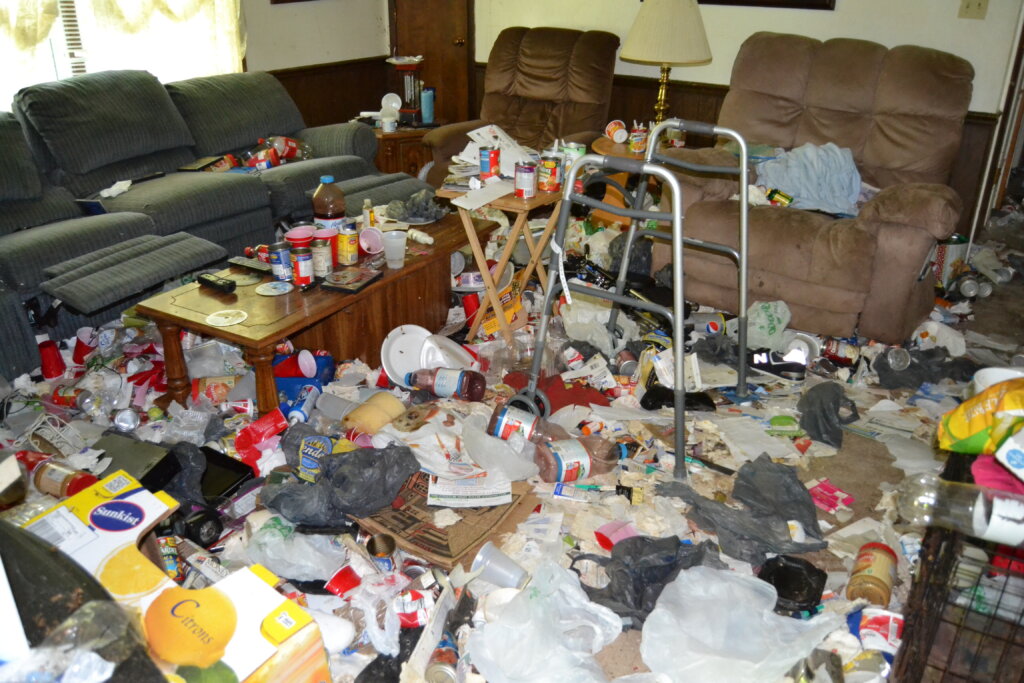
Ordering a dumpster may feel like the obvious first step. It is often not the safest or most useful one.
Important records can be mixed with ordinary papers. Cash, jewelry, photographs, medications, tax documents, vehicle titles, and estate records may be stored in unexpected places. A rushed cleanout can destroy items that are difficult to replace.
The house may also contain unstable piles, damaged flooring, mold, sewage, chemicals, animal waste, pests, exposed wiring, or leaking plumbing. An ordinary junk-removal crew may not be equipped to handle those conditions.
Before removing anything, answer four questions:
- Who legally owns the property and can authorize the sale?
- Is the house safe enough to enter?
- Which documents and valuables must be protected?
- How much cleanup is likely to improve the selling outcome?
Those answers should shape the project. The amount of clutter alone should not.
Confirm Ownership and Authority to Sell
Start with the deed and available title information. Gather mortgage records, property-tax statements, wills, trust documents, probate papers, divorce orders, HOA notices, and any previous closing documents.
More review may be needed when a deceased owner remains on the deed, several heirs inherited the house, a former spouse may still have an ownership interest, or the property is occupied by a tenant or relative. Mortgages, judgments, unpaid taxes, and other liens can also affect closing.
Handling the cleanout does not automatically give one family member authority to sell. A title company can identify many recorded issues, while a qualified Texas real estate or probate attorney can advise on disputed ownership, estate authority, or occupancy questions.
When the property came through an estate, review how to sell an inherited hoarder house in Houston, TX before paying for a large cleanout or accepting an offer.
Make the House Safe Enough to Evaluate
Do not pull boxes from the bottom of a leaning stack or force open a blocked door. First look for blocked exits, unstable furniture, broken flooring, exposed wiring, gas odors, plumbing leaks, sewage, chemicals, heavy mold, animal waste, pest activity, or damaged ceilings and stairs.
A hauling company is not automatically qualified to manage biohazards, severe mold, asbestos-containing materials, fuel, pesticides, sewage, or an unsafe structure. Depending on the property, you may need a remediation company, pest-control provider, electrician, plumber, engineer, or another specialist.
At this stage, the goal is not to make the house attractive. It is to create safe access to the areas needed for a realistic condition review.
Protect Documents, Valuables, and Personal Information
Set up a controlled sorting area before the main removal begins. Use categories such as keep, family review, donate, sell, recycle, shred, discard, and professional handling required.
Search filing cabinets, desks, drawers, books, coats, luggage, freezers, garage cabinets, and storage containers before disposing of them. Protect deeds, wills, court papers, tax returns, insurance records, vehicle titles, photographs, cash, jewelry, medications, and computer storage devices.
When several heirs or relatives are involved, photograph valuable items and maintain a simple inventory. That record can reduce disagreements about what was found, kept, donated, sold, or discarded.
Can You Sell a Hoarder House Without Cleaning It?
Yes. A buyer may agree to purchase the house in its current condition, but “as-is” and “contents included” are not identical terms.
An as-is provision generally addresses the condition of the real estate. It does not automatically allow the seller to leave furniture, trash, food, vehicles, chemicals, or personal property after closing.
The contract or an addendum should identify what may remain, what must be removed, who handles disposal, whether the buyer may change the price after inspection, whether the house must be vacant, and when possession transfers.
Read whether you can sell a hoarder house without removing the belongings in Houston for more detail about contents and contract terms.
You should also understand what selling a hoarder house as-is in Houston means before assuming cleanup, repairs, and personal property will all be treated the same way.
Decide How Much Cleanup Is Worth Doing
There is no rule that every hoarder house requires a complete cleanout. The useful question is whether the next dollar spent will improve access, reduce buyer uncertainty, expand the buyer pool, or increase net proceeds.
Full Cleanout and Selected Repairs
A complete cleanout may make sense when the building is fundamentally sound, most of the problem is accumulated belongings, and the owner can manage the work.
The seller may then deep-clean, treat pests or odors, complete selected repairs, and prepare for a traditional listing. This can improve presentation, but it can also reveal damaged flooring, leaking pipes, deteriorated drywall, foundation movement, or electrical problems that were previously hidden.
Partial Cleanout
A focused cleanout may offer a better balance. Clear safe paths to doors, bathrooms, the kitchen, electrical panel, water heater, HVAC equipment, attic entrance, major plumbing fixtures, garage, and visible foundation areas.
When buyers or contractors can inspect the important systems, they may evaluate risk more accurately. That can improve the quality of offers without requiring a property-wide project.
Sell in the Current Condition
Selling with most contents still inside may suit an out-of-state owner, an estate with limited cash, or a seller facing a firm deadline.
The tradeoff is uncertainty. When floors, walls, plumbing, electrical equipment, attic access, or the slab perimeter cannot be inspected, buyers may reserve more money for unknown conditions.
Before deciding, review whether you should clean a hoarder house before selling in Houston.
Understand the Full Cleanup Cost
A useful cleanup estimate explains the scope, exclusions, and conditions that can change the price. Ask whether the quote includes labor, trucks or dumpsters, disposal charges, stairs, garages, yard debris, mattresses, appliances, tires, paint, chemicals, contaminated materials, donation transport, and cleaning after removal.
Also consider the expenses that continue while the project is underway: mortgage payments, property taxes, insurance, utilities, HOA assessments, lawn care, security, and travel.
A low initial quote can become expensive when it excludes the hardest materials or underestimates the number of loads. The guide on how much hoarder house cleanup costs in Houston explains how to compare hauling, labor, remediation, and holding costs.
Houston Disposal and Code Considerations
Normal curbside collection may help with a limited number of large household items, but it is rarely sufficient for a whole-house cleanout. The City of Houston currently collects heavy trash every other month for eligible residential addresses receiving city curbside service and publishes specific placement, volume, and material restrictions. Confirm the property’s schedule and accepted items through the City of Houston Heavy Trash program.
The city also operates residential drop-off centers, but residents must satisfy identification and address requirements, and the facilities do not accept every type of waste or vehicle.
Properties in Pasadena, Pearland, Sugar Land, Missouri City, Katy, Baytown, or unincorporated county areas may follow different municipal, private-hauler, HOA, or utility-district rules. Verify the provider for the exact address before placing a large volume of material at the curb.
Interior clutter does not automatically create a municipal violation, but visible exterior conditions can lead to enforcement. Houston’s Community Code Enforcement program addresses trash accumulation, dangerous buildings, overgrown lots, junk vehicles, and materials or appliances stored in public view. Review any notice through the Houston Permitting Center and confirm deadlines, inspections, hearings, or liens before closing.
Find Out What the Belongings Are Hiding
Once safe access exists, evaluate the building itself. Houston-area homes may have roof leaks, storm damage, plumbing failures, foundation movement, mold, termite activity, outdated electrical systems, HVAC damage, sewer problems, open permits, or unpermitted conversions.
A packed garage can hide moisture, termite damage, an aging panel, or movement along the slab edge. Furniture against exterior walls can conceal cracks, staining, or water intrusion. Stored materials in an attic may prevent inspection of wiring, framing, insulation, and roof leaks.
Flood risk may also be relevant. The FEMA Flood Map Service Center is the official source for National Flood Insurance Program flood-hazard information, but a map designation is not a complete history of whether a specific house has flooded. Gather known flood information, insurance records, repair invoices, and photographs separately.
You do not need to repair every defect. You need enough information to compare repairing, listing as-is, or selling directly.
How Much Is a Hoarder House Worth in Houston?
There is no standard “clutter discount.” Value depends on the location, lot, property type, building condition, cleanup burden, repair needs, flood or storm history, title status, occupancy, and whether buyers can inspect important areas.
A renovated house nearby may not be a useful comparison if the subject property needs extensive disposal, remediation, and system repairs.
Use several sources: an agent’s opinion of as-is and repaired pricing, written cleanup and contractor estimates, comparable sales in similar condition, a professional appraisal when appropriate, and written offers from qualified buyers.
The goal is to estimate what the seller may retain after preparation, holding costs, transaction expenses, concessions, and mortgage or lien payoffs. For a deeper framework, read how much a hoarder house may be worth in Houston.
Compare the Main Ways to Sell
| Selling method | May fit when | Main benefit | Main tradeoff |
|---|---|---|---|
| Clean, repair, and list | The house has good retail potential and the owner can manage the project | Broad buyer exposure | Highest preparation cost and workload |
| List as-is with an agent | The owner wants market exposure without full renovation | Can attract retail and investor buyers | Showings, inspections, appraisal, and financing conditions may remain |
| Sell without an agent | The seller has a qualified buyer and understands the process | Direct control | The seller manages pricing, contracts, and coordination |
| Sell to a direct cash buyer | The owner prioritizes reduced preparation | The property may be evaluated in its present condition | The offer may be below a repaired retail price |
| Keep or rent | Continued ownership supports a realistic plan | Retains the property | Cleanup, repairs, insurance, and management remain |
Cleaning, repairing, and listing may offer the strongest market exposure when the home can be made appealing without an unreasonable investment. An as-is listing can reduce renovation work, although the seller may still need enough access for photographs, showings, inspections, and appraisal.
A direct buyer may evaluate the property based on its current condition and account for cleanup, repairs, and resale work after closing. This may fit an out-of-state owner, an estate, a seller with limited repair funds, or a property unlikely to support ordinary buyer financing.
A direct sale should be compared with other paths, not treated as the automatic answer. The guide comparing a cash buyer with a real estate agent for a Houston hoarder house explains how exposure, preparation, contingencies, timing, and net proceeds differ.
Understand Texas Disclosure Responsibilities
Selling as-is does not permit a seller to hide a known condition.
Texas Property Code Section 5.008 generally requires sellers of certain residential properties to provide a written disclosure notice, subject to statutory exceptions. The Texas Real Estate Commission’s current Seller’s Disclosure Notice addresses material facts and the physical condition of qualifying residential property.
A cluttered house creates an important distinction. A condition may genuinely be unknown because an area cannot be seen. A known leak, flood event, defect, violation, or repair should not be treated as unknown simply because belongings cover part of the evidence.
Provide truthful answers based on actual knowledge and seek professional guidance when a requirement or exception is unclear. Read what must be disclosed when selling a hoarder house in Houston for a focused explanation.
Important Disclaimer: This guide provides general educational information and is not legal, tax, financial, insurance, or real estate advice. Requirements may vary based on the property, ownership, title condition, municipality, estate status, and transaction. Consult a qualified Texas attorney, title company, tax professional, insurance professional, or other appropriate adviser about your specific situation.
Review the Buyer as Carefully as the Offer
The largest number on the first page of a contract may leave the seller with less after cleanup requirements, concessions, reductions, and delays.
Ask any direct buyer to explain the purchasing entity, proof of funds, inspection rights, option period, assignment provisions, price-change conditions, title company, closing expenses, treatment of remaining belongings, possession requirements, and cancellation rights.
Pressure to sign immediately, vague buyer identity, unclear fees, missing proof of funds, large last-minute reductions, and promises that do not appear in writing deserve closer review.
Use the checklist on how to avoid cash-buyer scams when selling a hoarder house in Houston before accepting a direct offer.
What Is the Fastest Practical Way to Sell?
A direct as-is sale may reduce cleaning, repairs, public showings, appraisal requirements, and buyer-financing risk. That can make it faster than preparing the property for a conventional listing, but it does not remove every delay.
A deceased owner on the deed, several heirs, liens, mortgage payoff issues, probate documents, occupancy disputes, unclear title history, and contract contingencies can all affect closing. A fast offer is not the same as a dependable closing.
The guide on the fastest way to sell a hoarder house in Houston explains which obstacles should be addressed first when timing matters.
A Spring Branch Example: Three Siblings Compare Their Selling Options
Consider a hypothetical Spring Branch house inherited by three siblings. One lives in Houston; the other two live outside Texas. The garage is packed, two bedrooms have narrow paths, and the kitchen contains spoiled food and damaged cabinets.
Before hiring a crew, the local sibling separates estate papers, jewelry, photographs, tax records, and vehicle titles. Pest control identifies rodent activity. A limited cleanout creates access to the electrical panel, water heater, attic entrance, bathrooms, and exterior walls.
That work reveals a slow plumbing leak, damaged flooring, wall staining, an older panel, and an enclosed patio that may need permit research. The first cleanup estimate excludes contaminated materials, paint, tires, and an old vehicle.
The siblings obtain an agent’s as-is pricing opinion, another detailed cleanout estimate, and written direct offers stating what may remain. One buyer accepts most contents but requires the vehicle to be removed. Another offers more initially but keeps broad inspection and price-reduction rights.
They compare expected proceeds, cleanup and holding expenses, workload, cancellation rights, proof of funds, treatment of the contents, and the likelihood of closing without repeated travel.
There is no universal winner. A family with available money and a local project manager may clean and list. Another may accept lower price potential to avoid a difficult out-of-state project.
The useful question is not simply, “Which offer is highest?” It is, “What must we spend, manage, and risk before this option can close?”
Six Steps to Prepare and Sell a Hoarder House in Houston
1. Confirm Ownership
Gather the deed, mortgage information, tax records, estate documents, and any trust or divorce papers.
2. Protect People and Important Belongings
Identify hazards, then secure documents, valuables, medications, photographs, and items requiring family review.
3. Create Useful Access
Prioritize doors, walkways, bathrooms, utilities, mechanical systems, the attic entrance, and visible structural areas.
4. Obtain Written Estimates and Opinions
Compare cleanup and repair estimates, an agent’s as-is assessment, and written direct offers.
5. Calculate Net Proceeds and Workload
Include preparation, holding expenses, concessions, liens, mortgage payoff, travel, and family time.
6. Put Important Terms in Writing
Address belongings, vehicles, possession, inspections, price adjustments, title issues, expenses, assignment rights, and cancellation.
Frequently Asked Questions
Can I sell a hoarder house as-is in Houston, TX?
Yes. You can sell a Houston hoarder house in its current condition if the buyer accepts the property and both parties agree to the contract terms. Selling as-is does not automatically remove disclosure responsibilities.
Do I need to clean a hoarder house before selling it?
Not always. A partial cleanout that creates safe access to major rooms, utilities, and structural areas may be enough to obtain informed offers. A full cleanout makes sense only when its expected benefit justifies the cost and work.
Can I leave belongings in the house after closing?
Only if the buyer agrees in writing. The contract should state what may remain, what the seller must remove, and who becomes responsible for disposal after closing.
How much does hoarder house cleanup cost in Houston?
The cost depends on the amount and type of contents, labor, disposal charges, access, hazardous materials, contamination, and the number of loads. Obtain detailed written estimates before deciding whether a full cleanout is worthwhile.
How much is a hoarder house worth in Houston?
Value depends on the location, building condition, hidden repairs, cleanup needs, title status, and access for inspection. Compare similar as-is sales, repair estimates, an agent’s opinion, and written buyer offers.
What must I disclose when selling a hoarder house in Texas?
Texas sellers may need to disclose known defects and conditions, subject to legal exceptions. Selling as-is does not allow a seller to conceal known flooding, damage, code issues, unpermitted work, or other material problems.
What is the fastest way to sell a hoarder house in Houston?
A direct as-is sale may reduce cleanup, repairs, showings, appraisal requirements, and financing risk. The timeline still depends on ownership, title, liens, occupancy, contract terms, and the buyer’s ability to close.
Choose the Selling Route That Fits Your Houston Property
Do not base the decision on what the house might become with an unlimited renovation budget. Base it on the property you have, the belongings requiring attention, repair risks hidden by the clutter, your title situation, available money, and the work you can realistically manage.
Cleaning and listing may fit a house with strong retail potential and an owner prepared to supervise the project. An as-is listing may offer market exposure with less renovation. A direct sale may fit an owner who wants to avoid a large cleanout, extensive repairs, repeated showings, or financing uncertainty.
If a direct as-is sale appears suitable, Houston Area Home Cash Buyers can review the property’s condition, contents, title situation, and seller goals. You can compare any local cash offer with an agent-assisted sale, cleanup plan, or another available path.
For a broader look at pricing, preparation, offers, contracts, and closing, review our step-by-step guide to selling your house fast in Houston, TX. It can help you understand how the full selling process works before choosing between a traditional listing, an as-is sale, or a direct cash offer.