

A house can be difficult to sell for reasons that have little to do with its appearance. Major repairs, unpaid debts, unclear ownership, and an occupied rental can each require a different approach.
Before spending money on improvements or accepting an offer, identify what is actually preventing a straightforward sale. That distinction helps you choose the right professionals, prepare realistic numbers, and avoid unnecessary work.
Quick Answer
To sell a distressed property in Texas, identify the property’s repair, financial, and ownership problems; gather supporting records; estimate its current-condition value; and compare selling options. You may repair and list, sell as-is through an agent, or consider a direct buyer. Title and legal requirements still apply.
In This Guide
- What counts as a distressed property?
- Start with safety and deadlines
- Document the House Before Making Repairs
- Consider Houston-area property conditions
- Check title and debts early
- How to price a distressed property
- Compare four practical options
- Compare proceeds, not just prices
- Frequently asked questions
What Counts as a Distressed Property?
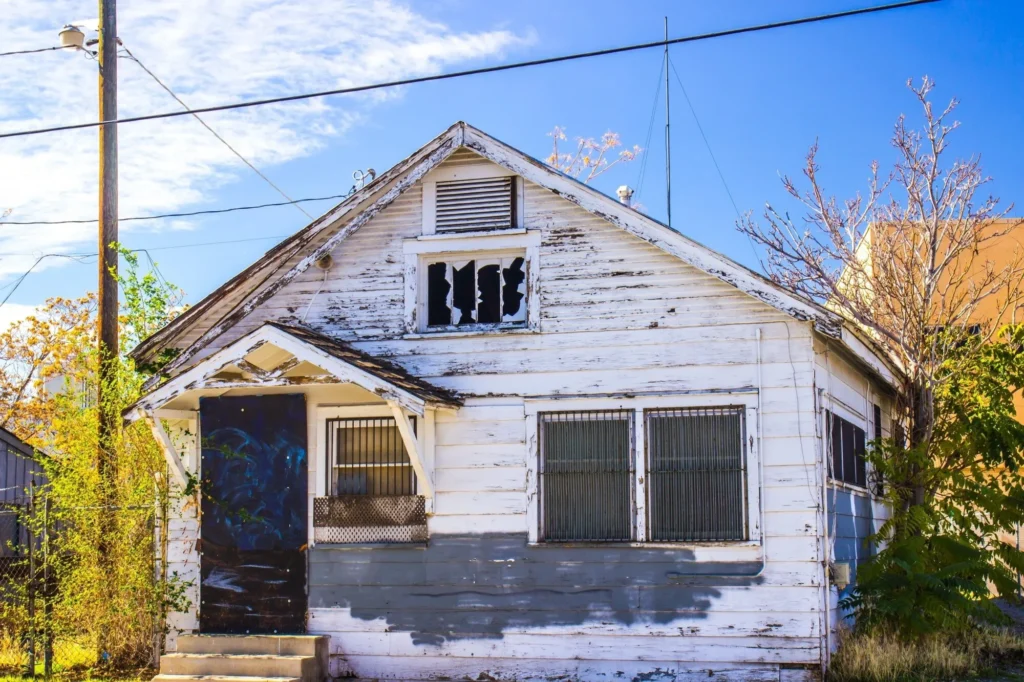
“Distressed property” is a broad description, not a single legal classification. It may describe a house with physical damage, an owner under financial pressure, or a transaction complicated by ownership issues.
Separating these problems is useful because fixing one does not necessarily solve the others.
| Type of difficulty | Examples | First useful step |
|---|---|---|
| Physical condition | Roof leaks, foundation concerns, outdated systems | Document the condition and obtain appropriate assessments |
| Financial pressure | Mortgage arrears, overdue taxes, liens | Request current balances and review deadlines |
| Ownership or title | Estate questions, missing releases, disputed ownership | Open a title review and obtain legal advice |
| Occupancy or management | Existing leases, belongings, access problems | Gather agreements and confirm lawful options |
A property needing renovation may fit our guide to selling a fixer-upper in Houston. A house with several overlapping problems needs a broader plan.
This guide provides general information, not legal, tax, or insurance advice. Requirements vary by property and situation. Consult the appropriate Texas professional about ownership, liens, foreclosure notices, disclosures, or insurance claims.
Start With Safety and Deadlines
Before arranging photographs or walkthroughs, determine whether the house can be entered safely. Structural damage, exposed electrical components, contaminated water, and unstable ceilings need professional attention.
After flooding, follow Ready.gov’s flood-safety guidance. Selling plans should not require you, a contractor, or a buyer to enter unsafe conditions.
Next, collect notices that carry deadlines:
- Mortgage default or foreclosure correspondence
- Property-tax collection notices
- Court documents
- Code-enforcement notices
- Insurance correspondence
- HOA notices or demands
Do not assume that marketing the property or signing a sales contract pauses any of these processes.
If mortgage payments are the immediate problem, the CFPB explains options to discuss with your mortgage servicer, including repayment arrangements and other assistance that may be available. Selling is one possible path, not the only one.
Document the House Before Making Repairs
Create a simple property file containing photographs, repair estimates, inspection reports, invoices, permits, warranties, and insurance correspondence.
Organize the work into three categories:
- Immediate safety concerns: Problems requiring professional assessment or restricted access.
- Issues affecting usability or financing: Significant roof, structural, electrical, plumbing, or other concerns.
- Cosmetic improvements: Paint, landscaping, finishes, and presentation.
This prevents a common mistake: spending available cash on cosmetic work while a more important problem remains unresolved.
Ask each contractor to identify what is known, what still needs investigation, and what assumptions are included in the estimate. A preliminary quote is not a guarantee against additional work.
Consider Houston-Area Property Conditions
Flood history and drainage
For a Houston-area property, gather records of any known water intrusion, insurance claims, and repairs. Use the FEMA Flood Map Service Center to locate available flood mapping for the address.
Mapping and the property’s actual history answer different questions. Do not describe a home as flood-free simply because of its mapped location.
Permits and jurisdiction
A Houston mailing address does not establish which office regulates a particular project.
For work within the appropriate City of Houston jurisdiction, begin with the Houston Permitting Center. For county-regulated work, consult Harris County’s permitting office.
The same address-specific approach applies elsewhere in Southeast Texas. Confirm the responsible authority before relying on a contractor’s assumptions.
Inherited houses
An inherited property can combine deferred maintenance with questions about who may sign the sales documents. Before clearing belongings or accepting an offer, confirm ownership and authority.
Our guide to selling an inherited house in Houston discusses the selling process, but estate-specific questions belong with an attorney and title company.
Check Title and Debts Early
A buyer interested in the house’s condition may still be unable to close until title requirements are satisfied.
Ask the title company about recorded liens, missing releases, ownership discrepancies, and documents needed from sellers. The Texas Department of Insurance explains the role of a title commitment, including the issues and conditions it identifies.
If several problems appear together, review the considerations involved in selling a Texas home with title issues.
For overdue property taxes, obtain current figures rather than using last year’s statement. Our discussion of selling a Houston-area house with back taxes can help you prepare questions for the closing team.
How to Price a Distressed Property
Start with comparable properties that reflect the home’s location, size, condition, and practical limitations. A renovated property’s asking price is not the same as your home’s current-condition value.
Useful evidence includes:
- Recent comparable closed sales
- Credible repair assessments
- Differences in condition and layout
- Occupancy and access restrictions
- Known title or compliance issues
- Actual written offers
Avoid applying a universal discount simply because the house is distressed. Two homes on the same street can have very different repair needs and buyer appeal.
For a closer look at the valuation questions, explore pricing a distressed property in Houston.
Compare Four Practical Options
Repair before listing
This may fit when you have funding, time, and a well-defined scope of work. Selected repairs could improve usability or attract more buyers.
The risk is spending more than the additional proceeds justify. Include permits, overruns, financing costs, and the expense of holding the property while work continues.
List the property as-is
An agent-assisted as-is listing lets you market the house without promising a renovation. It can expose the property to investors and other buyers willing to undertake work.
Buyers may still inspect, negotiate, or use financing. “As-is” is not the same as “no questions asked.”
Sell directly to a buyer
A direct buyer may offer a practical route when you want to avoid repeated showings or do not want to manage repairs.
Compare the purchase price, contingencies, expense allocation, and closing requirements. Convenience can have value, but a direct offer may be lower than the price achievable through a successful retail sale.
Keep the property
Keeping the house may make sense if the main problem is manageable and selling would create a larger housing or financial problem.
However, do not treat keeping or renting as cost-free. Include insurance, taxes, maintenance, vacancies, and any work needed for lawful and safe occupancy.
For another side-by-side perspective, review FSBO, agent-assisted, and cash-buyer options for distressed properties.
Compare Proceeds, Not Just Prices
For each option, estimate:
Expected sale price − selling expenses − repairs − holding costs − required payoffs = estimated proceeds
Use the same assumptions across offers. For example, do not compare an agent’s suggested asking price with a cash buyer’s firm offer as though both were completed sales.
Also separate estimated proceeds from taxable gain. Your tax treatment depends on facts beyond the amount left after debts are paid.
Hypothetical Houston example
An owner has a vacant Houston house with a leaking roof, dated finishes, and an old lien that may already have been paid.
Three routes deserve comparison:
- Repair the roof and selected finishes before listing.
- Market the house as-is with the repair reports available.
- Obtain direct offers based on its current condition.
The missing lien release needs attention under every route. A renovation would not resolve it, and a cash offer would not automatically remove it.
The useful question is not simply “Which option pays the most?” It is “Which option offers an acceptable outcome after costs, uncertainty, and the work I must manage?”
Understand As-Is Disclosures
Selling without repairs does not mean concealing known problems. Have the appropriate professional confirm which disclosures apply to the transaction.
The Texas Real Estate Commission’s Seller’s Disclosure Notice is a useful starting point for discussing property-condition disclosure.
Keep explanations factual. Describe what you know, provide available records, and distinguish a contractor’s opinion from a completed repair.
Review the Buyer and Contract
Before accepting a direct offer, ask:
- Who is the named buyer?
- What evidence supports the buyer’s ability to close?
- Are inspections or other contingencies included?
- Can the agreement be assigned?
- Which expenses will each party pay?
- What happens if title work takes longer than expected?
- What must be removed from the property?
You can review how Houston Area Home Cash Buyers approaches a purchase before deciding whether that process fits your circumstances.
Frequently Asked Questions
Can I sell a distressed property in Texas without repairs?
Often, yes, if a buyer accepts its condition and the transaction meets applicable requirements. An as-is sale does not automatically resolve title problems, disclosures, or safety restrictions.
What makes a property distressed?
The term can describe major physical damage, financial pressure, or ownership and occupancy complications. A distressed property does not have to be in foreclosure.
Should I repair my Houston house or sell it as-is?
Compare written repair estimates with realistic proceeds under both options. Include holding costs, possible overruns, and the time you would spend managing the work.
Can I sell a distressed house with tenants?
It may be possible. The lease, occupancy situation, access arrangements, and buyer’s plans need review. Do not assume selling automatically ends a tenant’s rights.
How should I compare offers on a damaged house?
Compare estimated proceeds, contingencies, expense allocation, and achievable closing dates. Give buyers the same available condition information so their offers are easier to evaluate.
Does selling to an investor guarantee closing?
No. Funding, title requirements, ownership documents, and contract conditions can still affect completion. Review the agreement and the buyer’s ability to perform.
Choose a Path You Can Manage
A distressed-property sale becomes more manageable when you separate condition, debt, ownership, and timing into specific tasks.
If a direct as-is sale appears suitable, Houston Area Home Cash Buyers can review your Houston-area property. You can request an offer to compare with listing or repairing before choosing how to proceed.