
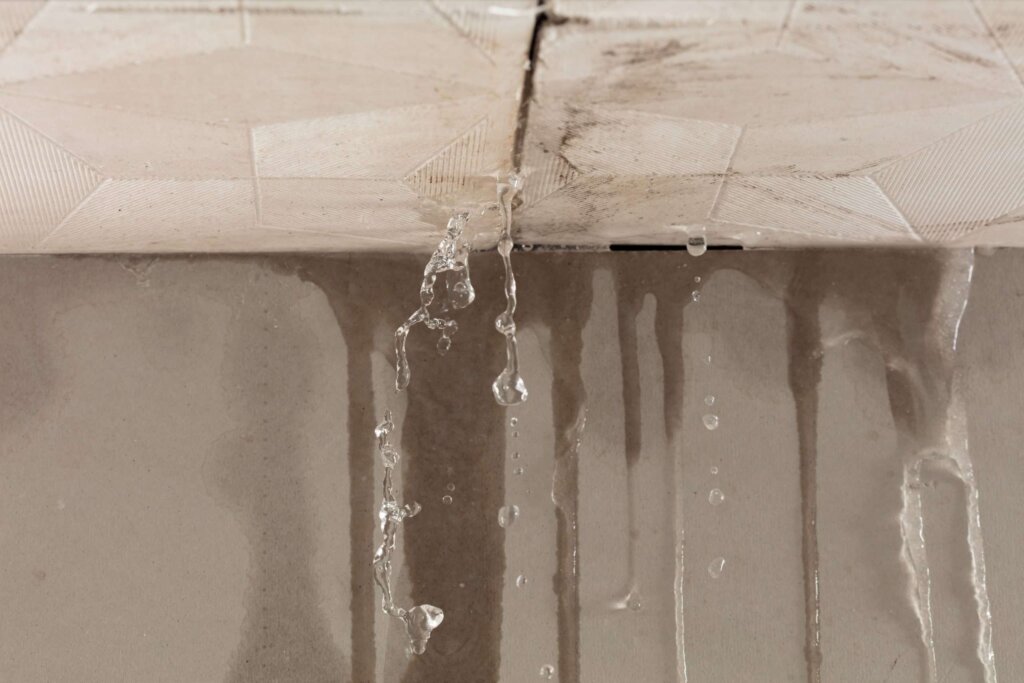
A house with water damage can still be sold in Houston. The more difficult question is whether you should repair the damage first, list the property as-is, or sell directly to a buyer willing to take on the repairs.
The best path usually becomes clearer once you answer four questions: Has the water source been stopped? How much damage is actually known? What documentation exists? And would managing the repairs improve your realistic net proceeds enough to justify the cost, time, and uncertainty?
A repaired plumbing leak with clear records is one selling situation. A vacant house with damaged flooring, wet drywall, cabinet damage, and an unresolved roof leak is another.
Before deciding how to sell, understand which situation you actually have.
Quick Answer
Yes, you can sell a house with water damage in Houston, TX. Your options may include repairing before listing, selling as-is through an agent, selling without an agent, or comparing a direct cash offer. The right choice depends on the source and extent of the damage, repair costs, documentation, buyer financing, your timeline, and expected net proceeds.
First, Understand What Kind of Water Damage You Have
“Water damage” can describe very different property problems.
Common causes include:
- Burst or leaking pipes
- Failed water heaters
- Appliance supply-line leaks
- Toilet or bathtub overflows
- Drain or sewer backups
- Roof leaks
- Storm-driven rain
- Window or exterior-wall intrusion
- HVAC drainage problems
- Natural flooding or rising water
- Long-term drainage or moisture problems
The first useful distinction is whether the property has an active water problem or a historical water event.
Active Water Problem
The source may still be leaking, materials may still be wet, or the full extent of the damage may be unknown.
These situations create more uncertainty because the repair scope can change as damaged materials are removed or additional moisture is discovered.
Historical Water Event
The water source has been corrected, affected areas have been dried or repaired, and records may be available showing what happened and what work was completed.
That does not make the property’s history irrelevant, but it creates a different selling situation from an active leak or unfinished repair project.
The 4 Questions to Answer Before Choosing How to Sell
Instead of beginning with, “How fast can I sell this house?” start with four questions that help you compare your real options.
1. Has the Water Source Been Stopped?
Replacing flooring or painting a ceiling stain does not fix a failed pipe, damaged roof, drainage issue, or recurring moisture source.
Start by identifying the cause.
Ask:
- Has the leaking pipe been repaired?
- Has the roof opening been addressed?
- Is the appliance connection still leaking?
- Is moisture still entering through a wall or window?
- Is standing water still present?
- Is the house still exposed to rain?
When it is safe to do so, stopping additional water intrusion can prevent the damage from becoming more extensive.
2. Is the Full Damage Scope Known?
Visible staining does not always show how far water traveled.
Depending on the event, affected materials may include:
- Drywall and insulation
- Flooring and subflooring
- Cabinets and trim
- Wall cavities
- Framing
- Electrical components
- HVAC components
The U.S. Environmental Protection Agency emphasizes moisture control and recommends quick action after indoor leaks or spills. EPA guidance states that drying wet or damp materials within approximately 24 to 48 hours can help prevent mold growth in many situations. See the EPA guide to mold and moisture in the home.
When the damage scope is unclear, repair uncertainty should be part of your financial decision—not ignored.
3. What Documentation Do You Have?
Clear records may help explain the property’s history to potential buyers.
Useful documentation can include:
- Photos and videos
- Plumbing invoices
- Roof repair records
- Water extraction records
- Moisture readings
- Contractor estimates
- Mold inspection or remediation records
- Insurance correspondence
- Repair invoices
- Permit and inspection records when applicable
There is a meaningful difference between saying, “There used to be a leak,” and being able to explain the source, response, and completed repairs with supporting documentation.
4. Is the Repair Project Worth Taking On?
Do not compare an as-is offer with the theoretical price of a perfectly renovated house.
Compare the actual financial paths.
For a repair-first sale, consider:
Expected sale proceeds after repairs
minus repair and mitigation costs
minus additional holding costs
minus selling expenses
minus likely concessions or additional negotiations
minus an allowance for repair uncertainty.
Then compare that result with the realistic outcome of an as-is listing or direct sale.
A homeowner with available funds, reliable contractors, and flexibility may decide that repairing first offers the best outcome. Another owner may decide that managing demolition, drying, reconstruction, contractors, inspections, and unexpected repairs is not worth the additional uncertainty.
Houston Water Damage and Flood Damage Are Different Problems
This distinction matters in the Houston area.
A burst pipe, failed water heater, or roof leak creates different questions from natural flooding or rising water.
For a property with flood history, homeowners and buyers may research:
- Previous flooding
- Flood maps
- Watershed information
- Repair history
- Insurance considerations
- Drainage conditions
- Previous mitigation work
- Floodplain permitting requirements
For official federal flood mapping, homeowners can use the FEMA Flood Map Service Center.
Harris County property owners can also use the Harris County Flood Education Mapping Tool for general information about mapped floodplains and watersheds.
Properties inside the City of Houston may also involve floodplain permitting questions. The Houston Permitting Center Floodplain Management Office states that some flood-damaged or substantially damaged properties may require a Floodplain Development Permit depending on the location and flood hazard zone.
Requirements are property-specific. Do not assume that the same rules apply to every water-damaged house or across every municipality and county in the Greater Houston area.
Review Insurance Before Assuming What Is Covered
Do not assume that every type of water damage is covered—or that every water problem is excluded.
The Texas Department of Insurance explains that many homeowners policies cover certain sudden and accidental water losses, while damage from gradual leaks or seepage is commonly excluded. Natural flooding generally requires separate flood coverage. Actual coverage depends on the policy and circumstances. See the Texas Department of Insurance guidance on water damage and mold coverage.
For questions about a specific claim, policy, or settlement, speak with the insurer or an appropriate insurance professional.
Your Options for Selling a Water-Damaged House in Houston
There is no single best selling method for every damaged property.
| Option | May Fit Best When | Main Tradeoff |
|---|---|---|
| Repair, then list | Damage is understood and you have time and funds | Costs and hidden problems can increase |
| List as-is with an agent | You want broad market exposure without full repairs | Inspections, financing, and negotiation risks remain |
| Sell without an agent | You have a qualified buyer and understand the transaction | You manage pricing, contracts, disclosures, and coordination |
| Compare a direct cash sale | You want to avoid managing major repairs | Offer may be below the potential price of a successfully repaired retail sale |
Option 1: Repair Before Listing
Repairing first may make sense when:
- The source of the water is known and fixed
- The scope is reasonably clear
- Reliable estimates are available
- You have funds to complete the work
- You have time to manage the project
- The expected increase in net proceeds appears to justify the investment
The financial risk is not only the first contractor estimate.
If demolition reveals additional affected materials, or the house also needs roof, foundation, electrical, or plumbing work, the project can become more complicated.
A house with several major property problems should be evaluated as one complete project rather than a collection of unrelated repair estimates.
For properties with multiple major issues, see the guide to selling a Houston house that needs major repairs. The related site page covers broader repair-heavy selling situations.
Option 2: List the House As-Is
An as-is listing can provide open-market exposure without requiring a full renovation.
However, “as-is” does not necessarily mean:
- No inspection
- No questions about the damage
- No financing concerns
- No contract contingencies
- No negotiation
The actual outcome depends on the contract, buyer, property condition, insurance availability, financing, disclosures, and negotiations.
This path may work when the property is attractive to renovation buyers, investors, landlords, or other buyers prepared to evaluate its current condition.
Option 3: Sell Without an Agent
A for-sale-by-owner approach may be reasonable when a homeowner already has an interested and financially qualified buyer and understands the transaction process.
The seller still needs to consider:
- Pricing
- Disclosure requirements
- Contract terms
- Title work
- Mortgage payoffs
- Inspections
- Access
- Closing coordination
Avoiding an agent does not eliminate the underlying water-damage or transaction issues.
Option 4: Compare a Direct Cash Offer
A direct sale may be worth comparing when:
- You do not want to manage reconstruction
- The property is vacant
- You live outside the Houston area
- The water damage is part of a larger repair problem
- The property has water damage and mold concerns
- The house also has structural or roof damage
- You inherited a repair-heavy property
- You prefer to avoid repeated showings
- The condition may make traditional financing more difficult
When moisture and mold are part of the problem, see the guide to selling a house with mold in Houston. For water intrusion affecting framing or other structural components, see selling a house with structural damage in Houston.
A direct sale is not automatically the best financial option. The useful comparison is between realistic net outcomes, not simply a cash offer versus a hypothetical fully renovated sale price.
Example: When Water Damage Is Only Part of the Problem
Imagine a vacant house in southwest Houston where a failed plumbing connection damaged kitchen flooring, lower drywall, and cabinets.
The water has been shut off, but the owner does not yet know whether the subfloor also needs replacement. The house needs roof work and general updating.
The real decision is larger than whether to replace the cabinets.
The owner should compare:
- The likely total project cost
- The potential net proceeds after repairs
- The realistic as-is market outcome
- Available written direct offers
- The time and uncertainty involved with each path
A local homeowner with renovation experience and available funds may choose to repair.
An out-of-state heir who does not want to manage demolition, drying, reconstruction, and contractor scheduling may reasonably choose a different path.
The property’s condition matters, but the owner’s resources and goals matter too.
Do You Have to Disclose Water Damage When Selling in Texas?
Selling a property as-is does not automatically eliminate applicable disclosure obligations.
The Texas Real Estate Commission currently lists the Seller’s Disclosure Notice as Form 55-1, effective May 28, 2026. The form addresses property conditions and includes water- and flood-related matters. Review the current TREC Seller’s Disclosure Notice.
Requirements and exceptions can depend on the property and transaction.
Practical note: This article provides general information, not legal, insurance, tax, engineering, or financial advice. For property-specific disclosure questions, consult an appropriate Texas real estate attorney or qualified real estate professional.
Common Mistakes to Avoid
Covering the Evidence Without Fixing the Source
Paint and new flooring can improve appearance, but they do not repair an active plumbing leak, roof opening, or moisture source.
Pricing From an Imaginary Perfect House
Do not compare the value of a fully renovated house directly with an as-is offer without subtracting repair costs, holding expenses, selling costs, and uncertainty.
Starting a Large Project Without a Complete Plan
Beginning demolition without understanding the funding, contractors, drying, rebuilding, permits, and intended sale strategy can leave an owner with an unfinished property.
Throwing Away Documentation
Keep photographs, invoices, estimates, moisture information, insurance correspondence, and permit records that may help explain the property’s history.
Choosing a Cash Buyer Based Only on a Verbal Price
The highest number mentioned on a phone call is not necessarily the strongest offer.
Review the actual written terms.
How to Compare Cash Buyers for a Water-Damaged House
When evaluating a direct offer, review more than the purchase price.
Consider:
- Buyer identity and contact information
- Written purchase terms
- Proof of funds when appropriate
- Inspection or access provisions
- Contingencies
- Assignment or resale language
- Title company involvement
- Responsibility for specific transaction costs
- Cancellation provisions
- Important deadlines
Be cautious about unexplained pressure, unclear fees, unwritten promises, or substantial last-minute price reductions that are not supported by genuinely new property information.
A written offer should be clear enough to compare with your other options.
How a Direct Sale May Work
For homeowners who want to compare a direct sale, the process may look like this:
Step 1: Share the Property Details
Provide basic information about the location, condition, water-damage history, occupancy, other repairs, title situation, and preferred timeline.
Step 2: Review the Property
Houston Area Home Cash Buyers reviews the property and may ask follow-up questions or request a walkthrough. Any potential offer may depend on the property’s condition, title situation, and seller circumstances. The company describes its current process on its How It Works page.
Step 3: Compare Your Options
Compare the written offer with repairing and listing, listing as-is, selling yourself, keeping the property, or another qualified offer.
Step 4: Move Toward Closing if You Accept
If an agreement is accepted, the transaction moves through the appropriate title and closing process under the agreed contract terms.
Title issues, liens, ownership questions, occupancy, or other property-specific matters can affect the process.
FAQs About Selling a House With Water Damage in Houston
Can I sell a house with water damage in Houston without making repairs?
Yes. You may be able to sell the property as-is through an agent, directly to a buyer, or through another suitable sale option. The damage may affect price, buyer interest, financing, and inspections.
Should I repair water damage before selling my house?
It depends on the repair cost, damage extent, available funds, and expected net proceeds. Repairs may make sense when the scope is clear, while selling as-is may be more practical when costs or hidden damage are uncertain.
How much does water damage affect a home’s value in Houston?
There is no fixed percentage. The impact depends on the source, severity, affected materials, remaining moisture, repair quality, documentation, and how much uncertainty the buyer is taking on.
Do I have to disclose water damage when selling a house in Texas?
Applicable disclosure requirements depend on the property and transaction. Selling as-is does not automatically remove disclosure obligations, so property-specific questions should be reviewed with an appropriate Texas real estate professional or attorney.
Can a buyer get a mortgage on a water-damaged house?
Possibly. Financing can depend on the severity of the damage, whether active problems remain, insurance availability, appraisal results, lender requirements, and the buyer’s loan program.
Can I sell a Houston house with both water damage and mold?
Yes. A house with water damage and mold concerns may still be sold. The moisture source, extent of affected materials, current condition, documentation, and buyer expectations can all affect the sale.
Who buys houses with water damage in Houston?
Potential buyers may include traditional homebuyers, renovation buyers, landlords, investors, contractors, and direct cash buyers. The likely buyer pool depends on the property’s condition, repair needs, financing eligibility, and level of uncertainty.
Choosing the Best Way to Sell Your Water-Damaged Houston House
A water-damaged house is not automatically an unsellable house.
Before deciding what to do, determine whether the water source is fixed, how much damage is known, what documentation exists, what repairs will realistically require, and how the net outcome of each option compares.
Some homeowners may benefit from completing repairs and pursuing a retail sale. Others may prefer an as-is listing.
For homeowners who do not want to manage extensive repairs or a traditional listing process, comparing a direct offer can provide another useful option.
If selling as-is appears to fit your situation, Houston Area Home Cash Buyers can review your Houston-area property and provide a local cash offer for you to compare with repairing, listing, keeping, renting, or another selling path.